


 LinkedIn
 微博
微博 微信
微信近日,作为亚洲奢侈品行业的重要盛会之一,2026年奢侈品行业峰会(The Luxury Symposium 2026)在香港成功举办。
本次活动汇聚了数百位奢侈品行业领袖、高管及专家,深入探讨了正在重塑奢侈品行业的关键驱动力,以及亚洲市场(尤其是中国内地与中国香港市场)的行业发展新格局。
在贝恩公司资深全球合伙人布鲁诺(Bruno Lannes)看来,如今中国奢侈品消费者的入门路径,已与过去20年截然不同。他指出,契合本土文化、引发情感共鸣,以及二手奢侈品的兴起,这三大趋势正在重塑国际品牌建立长期吸引力的核心逻辑。
布鲁诺是中国奢侈品消费者研究领域的资深专家之一。自2009年以来,他领衔撰写的年度《中国奢侈品市场报告》,已经成为行业制定战略的重要参考。
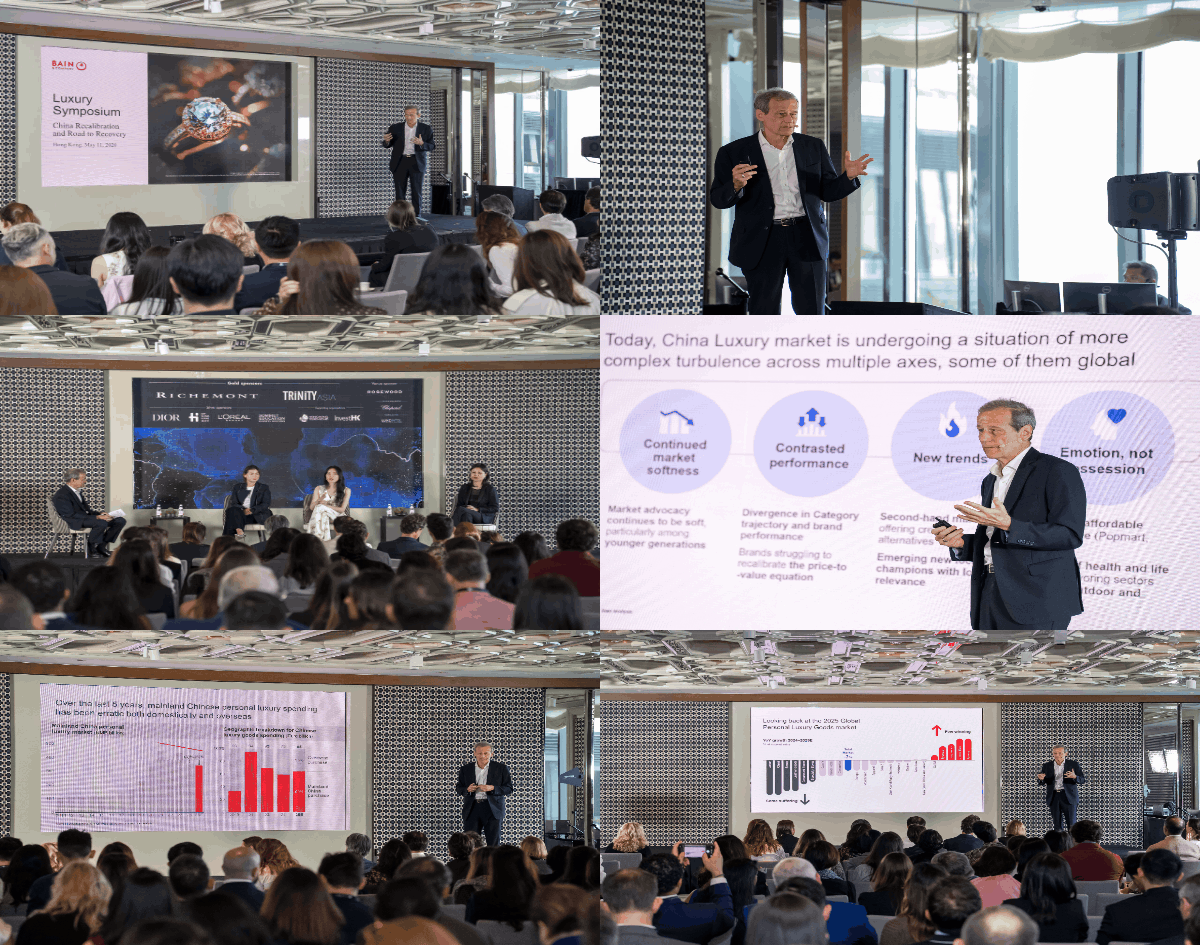
本次活动上,他发表了题为《中国:奢侈品市场新格局》的主题演讲,并主持了聚焦行业新面貌的专题讨论。
在接受《Luxe Intel》专访时,他提出一个关键问题:如今品牌不该再问“中国消费者是否回来了”,而应问——“不同中国消费者群体正在发生怎样的变化”。
以下是采访实录

Q1:您认为目前中国乃至亚洲奢侈品消费者最显著的一个变化是什么?
“在我的演讲中,我分享了后疫情时代中国消费者的一系列变化。其中最核心的一点是:中国的年轻消费者更加重视价格可承受性与情绪价值,也更加关注与本土文化的契合。这使得他们在奢侈品消费上变得更加审慎与理性,对购买节奏和选择呈现出新的变化。”
Q2:如果需要用一张图向涉足亚洲市场的奢侈品企业CEO解释中国市场过去20年的演变,这张图会呈现什么,又将指引他们做出哪些调整?
“这张图会展示过去20年来个人奢侈品市场的整体规模,并呈现市场所历经的多个周期与起伏变化。它向奢侈品企业CEO传递的核心信息是,过去的成功打法并不能保证在未来继续奏效;中国奢侈品市场正在不断变化和成熟,品牌必须主动应变、增强韧性,才能持续保持吸引力。”
Q3:您在演讲中提到,二手奢侈品市场将迎来持续增长,并认为这是中国奢侈品生态系统走向成熟的标志,而非威胁。这一趋势对奢侈品企业CEO来说意味着什么?
“总体来看,市场走向成熟是一件好事。这意味着消费者更加理性、更加多元,奢侈品也逐渐融入日常生活。在这一过程中,消费者会寻求更加灵活、多样的选择,而二手奢侈品正是在这样的背景下逐步发展。通常而言,一个品牌在二手市场的吸引力,与其在一手市场的表现高度相关。对消费者来说,二手市场也提供了一种以更低门槛接触品牌、建立关系的重要渠道。”
Q4:目前,亚洲最令人瞩目的奢侈品地标在哪里?原因是什么?
“包括北京三里屯在内的一些核心商业地标,正逐步成为奢侈品牌展示创新体验的重要窗口。这里不仅汇聚了众多国际顶级奢侈品牌,也出现了由全球顶尖建筑师打造的标志性品牌空间,已成为体现品牌创新表达与零售体验升级的重要代表性地标。”
For Bruno Lannes, Senior Partner, Greater China at Bain & Company, China's luxury consumer is no longer following the same entry path that defined the last two decades. His analysis highlights a market where local relevance, emotional accessibility, and secondary luxury are reshaping how international brands build long-term desirability.
Introduction
Bruno Lannes is Senior Partner, Greater China at Bain & Company, and one of the most-cited voices on the Chinese luxury consumer.
For more than two decades, his annual China Luxury Report has set the benchmark the industry plans against.
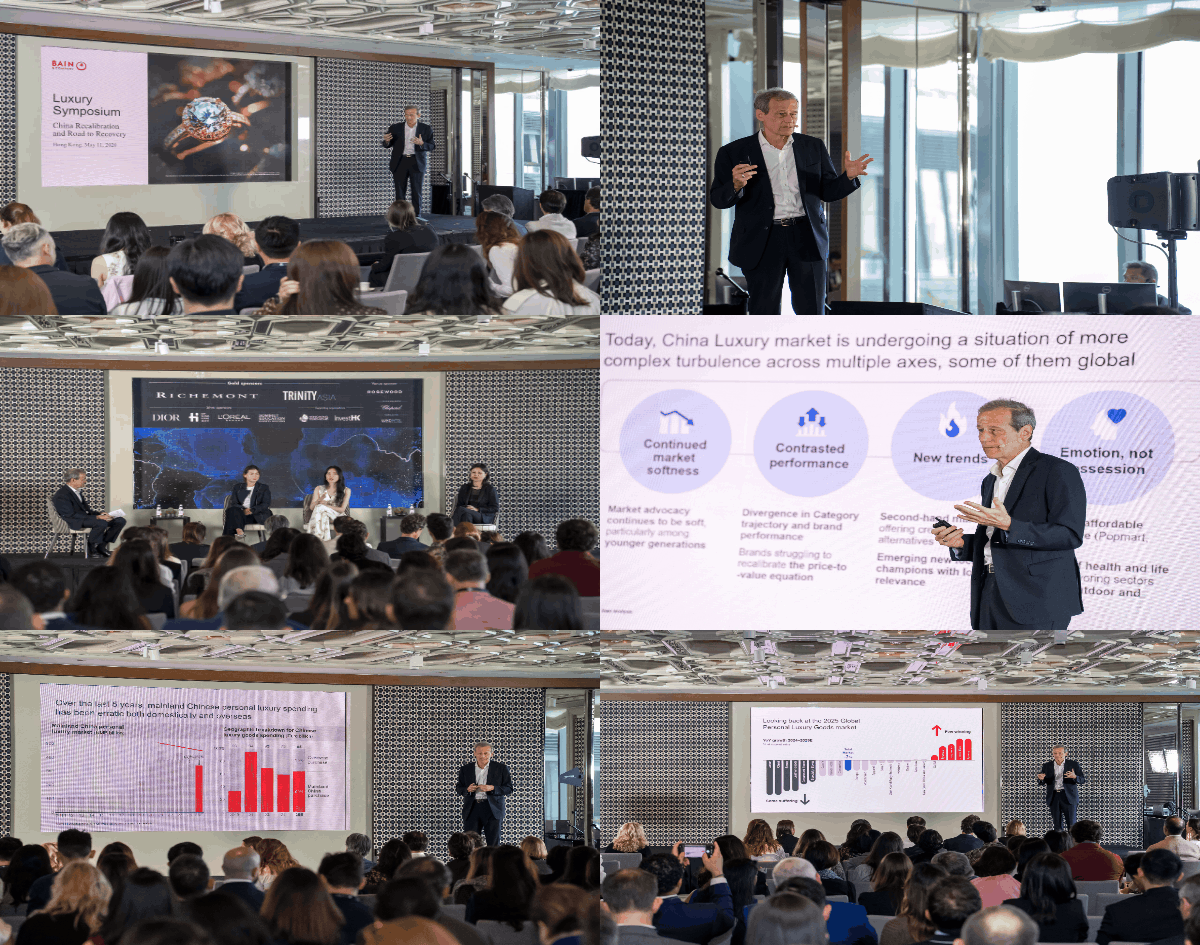
At the 2026 Luxury Symposium in Hong Kong, he opened Part 2 with a keynote on "China: The new luxury landscape" and moderated the panel on China's emerging luxury identity.
In this conversation with Luxe Intel, he reframes the question every brand is asking—not whether China is back, but which China is back.
Q&A with Luxe Intel

Q1:In one sentence, how would you define your role today, and what got you here?
"Luxury is one of my focused areas as a consultant, and the Hong Kong Luxury Symposium is a great opportunity to share and learn among luxury practitioners and experts."
Q2:What is the single biggest shift you are seeing in the Chinese or Asian luxury consumer right now, and what some of Western brands still getting wrong about it?
"In my presentation, I have described many shifts that describe the post Covid China consumers; among them, the biggest is that younger Chinese consumers are looking for affordable and locally relevant emotions, and as a result, many are delaying their entry into international luxury."
Q3:You have covered the Chinese luxury consumer through every cycle of the last two decades. If you had to put one chart in front of every luxury CEO operating in Asia today, what would it show, and what would it tell them to do differently?
"The chart would show the total personal luxury market size over 2 decades and describe the many cycles, ups and downs, that this market has enjoyed; it would remind luxury CEOs that past playbooks cannot ensure future success and that China is a constantly evolving and maturing luxury market that requires adaptation and resiliency to deliver continuous desirability."
Q4:In your keynote you flagged the second-hand market as positioned for sustained growth, and described it as a maturity signal for China's luxury ecosystem rather than a threat to it. That framing cuts against how most Western houses are still thinking about resale. What does it actually mean for a luxury CEO if China's secondary market is maturing?
"In general, maturity is a good thing! It means that consumers are more diverse, more discerning, and that luxury has become part of their daily life. As a result, they are looking for more options to satisfy their needs, and this is where the secondhand market plays a role. Typically, the desirability of brands in the secondhand market is similar to the desirability in the primary market. The secondhand market is a way for consumers to develop a relationship with a brand without investing too much for it."
Q5:Hong Kong, Shanghai, or somewhere else: where is the most exciting luxury moment happening in Asia right now, and why?
"I believe it is Beijing Sanlitun with its new beautiful pavilions from some of the top worldwide architects, hosting some of the most well-known luxury international brands."